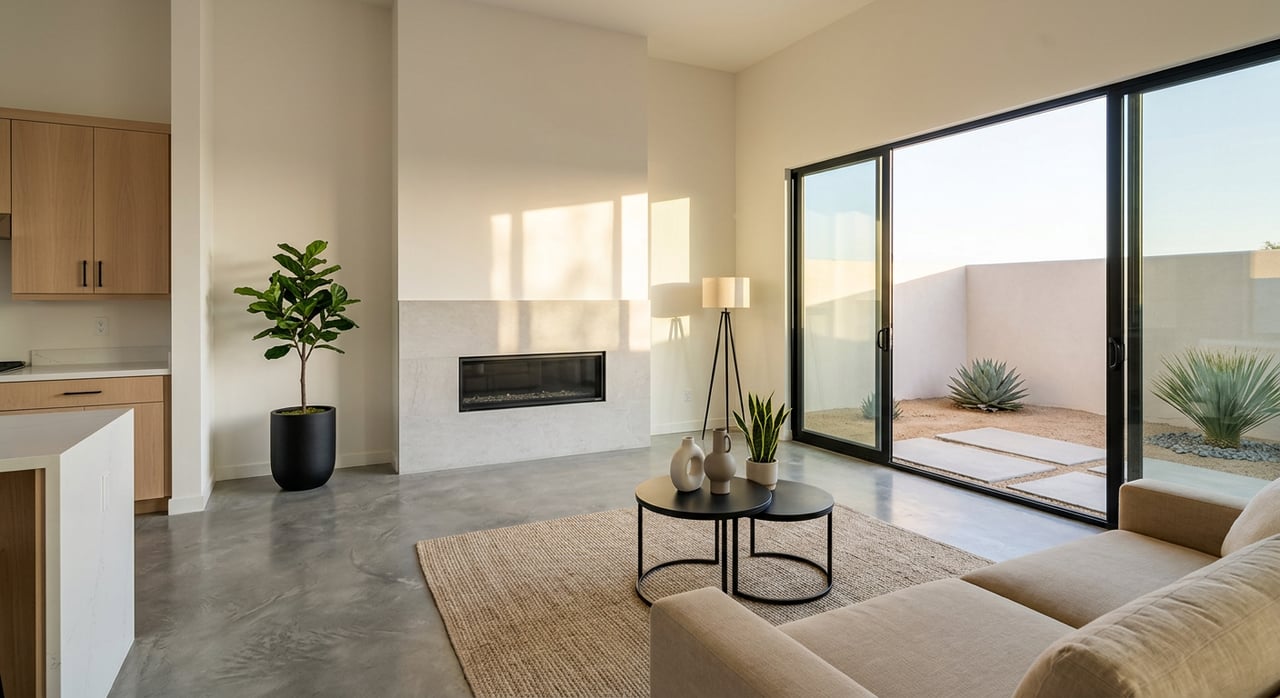
Selling a luxury or upper‑mid home in Queen Creek means competing for attention the moment your photos hit the MLS. With a citywide median listing price in the high $600,000s and days on market often stretching into the 60s to 80s, presentation can be the difference between a fast, strong offer and a slow, price‑cut story. If you want qualified buyers to act with confidence, your listing needs to look and feel turn‑key online and in person.
In this guide, you’ll learn how professional staging, photography, and 3D tours work together to elevate Queen Creek listings, what to prioritize, what it costs, and the realistic return you can expect. You’ll also get a simple launch checklist and compliance tips to keep everything on track. Let’s dive in.
Why presentation matters in Queen Creek
Queen Creek has clear price tiers. You’ll find established neighborhoods like Sossaman Estates and Hastings Farms in the $600,000 to $800,000 range alongside newer gated pockets and custom builds that reach into seven figures. That mix means buyers compare across styles and price points every day.
Instead of a single dollar figure for “luxury,” think in percentiles. Many industry sources consider luxury to be roughly the top 10 percent of local listings. In practice here, the luxury band often begins in the low to mid seven‑figure range for higher‑end gated and custom homes, while upper‑mid listings sit just below that. Framing your home within these bands helps you choose the right level of staging and media.
What staging actually changes
The National Association of Realtors reports that about 29 percent of agents saw staged homes receive a 1 to 10 percent increase in the dollar value offered, and roughly half of seller agents observed shorter time on market. They also identify the living room, primary bedroom, and kitchen as the highest‑impact rooms to stage. You can reference these findings in the NAR Profile of Home Staging. NAR’s staging report highlights these results.
Buyer agents also say high‑quality photos, videos, and virtual tours are important listing assets. That means staging does double duty. It helps your home show well in person and it improves how your photos and 3D tours look online, which is where most buyers decide to book a showing.
If you want additional context, industry roundups have long reported faster sales and stronger offers for staged properties, even though methods vary. The key is to use NAR’s benchmarks as your baseline, then tailor the plan to your home and price band. The Home Staging Institute summarizes typical benefits and trends.
The complete media kit for launch day
Think of your sale as a marketing campaign. Your first two weeks live are critical, so go to market with a full package.
Essential pro photography
High‑quality, HDR or DSLR photography is your first impression. For most upper‑mid and luxury homes, aim for a complete set of 20 to 30 well‑composed images that tell a story. Include:
- A hero sequence that shows curb appeal, main living area, kitchen, and primary suite.
- Twilight exteriors when the pool, lighting package, or views are selling points.
- Drone aerials for larger lots, mountain corridors, and overall context.
These elements help buyers understand scale and flow at a glance. They also create stronger thumbnails, which improves click‑through and saves.
3D tours and floor plans
Immersive media converts interest into qualified showings. A 3D tour and a clear floor plan help remote or out‑of‑state buyers self‑qualify, which is common in Queen Creek’s luxury segment. Place the 3D link prominently in the MLS and on your property site so it is easy to find. Matterport outlines how 3D tours increase engagement and buyer confidence.
Staging priorities that fit Queen Creek
Start with the rooms buyers care about most:
- Living room: Define seating zones and sightlines to showcase volume and natural light.
- Kitchen: Simplify surfaces, add tasteful texture, and highlight appliances and island seating.
- Primary bedroom: Create a calm retreat with balanced scale and layered bedding.
- Outdoor living: Style patios and pools for indoor‑outdoor flow, a major lifestyle draw here.
These priority rooms align with NAR’s findings on where staging matters most. See NAR’s summary of high‑impact rooms and results.
Budget and ROI benchmarks
You do not have to stage every room to make an impact. Focused spend in the right places often produces the best return.
Typical staging costs
For many single‑family listings, professional staging commonly ranges from about $800 to $3,000 for partial to whole‑home staging. Full vacant staging at the luxury level can cost more, especially when monthly furniture rentals are involved. HomeAdvisor provides a helpful overview of typical staging costs.
Virtual staging costs
Virtual staging is a cost‑effective way to present vacant rooms online. Well‑known providers advertise per‑image pricing often between $24 and $75 depending on style and realism. BoxBrownie publishes clear examples and pricing.
Photography and media costs
Professional photo packages in many regions range from roughly $150 to $600 depending on scope, with add‑ons for aerials, twilight, video, and floor plans. Your agent should recommend the right mix based on your lot, views, and price tier.
How to prioritize spend
Use this simple rule for upper‑mid and luxury homes:
- Invest first in high‑quality photography, twilight exteriors, and drone. These assets earn the first click.
- Stage the hero rooms (living, kitchen, primary) to convert online views into showings.
- Add a 3D tour and floor plan to support remote buyers and reduce friction.
A modest, well‑planned package typically represents a small percentage of your list price, yet industry data supports meaningful improvements in sale price and time on market. NAR’s agent survey documents both price uplift and faster sales for staged homes.
Before‑and‑after scenarios with conservative math
Numbers help you see the potential return. These examples use NAR’s conservative uplift range and typical local price points. Your actual results depend on comps, pricing, and negotiation.
Upper‑mid single‑family example
- Assumed list price: $750,000 (upper‑mid Queen Creek).
- Baseline days on market: about 88 days.
- Prep plan: $2,500 targeted staging for living + primary + curb refresh, $450 professional photography, $300 3D tour. Total spend: $3,250.
- Conservative effect: 3 percent price uplift within NAR’s 1 to 10 percent band, plus 30 days fewer on market.
Conservative calculation:
- 3 percent of $750,000 equals $22,500 additional gross.
- Subtract $3,250 prep spend for about $19,250 net uplift.
- If you save roughly one month of carrying costs (example $2,500, varies by mortgage, taxes, insurance, and HOA), your overall outcome improves further.
This is the kind of edge that can keep you on plan and off the price‑reduction path. NAR’s findings support both uplift and faster sales.
Luxury gated example
- Assumed list price: $1,750,000 (luxury tier, similar to new gated offerings in town).
- Prep plan: Full vacant staging, twilight photography, aerials, Matterport 3D, floor plan, and property website. Estimated spend: $12,000 to $25,000 depending on scale and rental months.
- Conservative effect: 2 to 4 percent uplift is a reasonable band for luxury. Use 2.5 percent for a public example.
Conservative calculation:
- 2.5 percent of $1,750,000 equals $43,750 additional gross.
- Subtract an $18,000 mid‑range marketing spend for about $25,750 net uplift.
At this level, buyers also expect premium media. Meeting those expectations protects your days on market and your negotiating leverage.
Launch day checklist
Use this sequence to start strong:
- Finalize repairs, cleaning, landscaping, and staging before photos.
- Capture pro photography, twilight exteriors, aerials, and a 3D tour with a floor plan.
- Write concise, benefits‑forward copy that highlights unique features and lot advantages.
- Launch on MLS with the full media set live on day one, including a visible 3D link and downloadable floor plan.
- Syndicate to a polished property page for easy sharing.
- Monitor first‑week metrics closely: views, saves, showing requests, and open‑house traffic.
Early impressions in the first 7 to 14 days often drive your strongest showings and offers. NAR emphasizes that staging and quality media support faster, higher offers.
Compliance and disclosures
If you use virtual staging or edit images, disclose clearly. Many MLS systems require visible labeling on the image itself and in the listing remarks, and some jurisdictions ask that you display the unedited photo alongside the edited version. Always confirm ARMLS and local MLS rules before publishing. For reference on typical rules language, review this example of MLS compliance guidance from a regional association. See a sample compliance rules page here.
Why partner with The Collective AZ
Selling at the upper‑mid or luxury level in Queen Creek calls for a boutique, full‑service approach. The Collective AZ pairs deep neighborhood knowledge with professional staging, high‑end photography, and immersive tours to showcase your home at its best. With in‑house staging and a connected lender, your prep and transaction stay coordinated and efficient from consult to close. You get a thoughtful plan, executed with care, and clear reporting on views, showings, and offers so you always know where you stand.
Ready to talk strategy for your home? Connect with Judy Collins for a tailored staging and media plan that fits your timeline and goals.
FAQs
What rooms should I stage in a Queen Creek luxury home?
- Focus on the living room, kitchen, and primary bedroom, then style outdoor living areas to highlight indoor‑outdoor flow, which aligns with NAR’s highest‑impact rooms.
How much does professional staging cost for upper‑mid homes?
- Many projects fall between about $800 and $3,000 for partial to whole‑home staging, while full vacant staging at the luxury level can be higher due to furniture rental timelines.
Do 3D tours actually help sell high‑end homes?
- Yes, 3D tours and floor plans increase engagement and help remote buyers self‑qualify, which reduces friction and supports stronger, faster offers for luxury listings.
Is virtual staging allowed in MLS listings?
- Often yes, but it must be clearly labeled; always follow your MLS’s rules on image labeling and disclosure, and keep unedited originals available when required.
How many listing photos should I include for a luxury property?
- Aim for a complete, story‑driven set of about 20 to 30 high‑quality images, plus twilight exteriors and aerials when they showcase key features.
What defines “luxury” in the Queen Creek market?
- Think in percentiles rather than a fixed price; a practical rule is the top 10 percent of local listings, with Queen Creek’s luxury band often starting in the low to mid seven figures.