Trying to pick your spot in Phoenix but torn between the East Valley and the North Valley? You are not alone. From commute patterns to weekend fun, the choice shapes your day-to-day life more than any single home feature. In this guide, you’ll get a clear, practical comparison so you can decide where to start your search with confidence. Let’s dive in.
East vs. North Valley, defined
When locals say “East Valley,” they usually mean Mesa, Tempe, Chandler, Gilbert, Queen Creek and nearby communities. The region is formally promoted as one economic area by the PHX East Valley Partnership, so you’ll see the term in relocation and business materials.
“North Valley” is an informal label. In practice, it refers to the parts of the metro north of central Phoenix, including North Phoenix, North Scottsdale, Paradise Valley, Cave Creek and Carefree. City and regional references use variations like “North Phoenix/North Gateway,” so it helps to be explicit about the places you’re considering. A helpful context map is the Phoenix North/North Gateway planning area used in regional work, which many people use as shorthand for the broader North Valley idea (Phoenix North map).
How each area lives
East Valley day-to-day
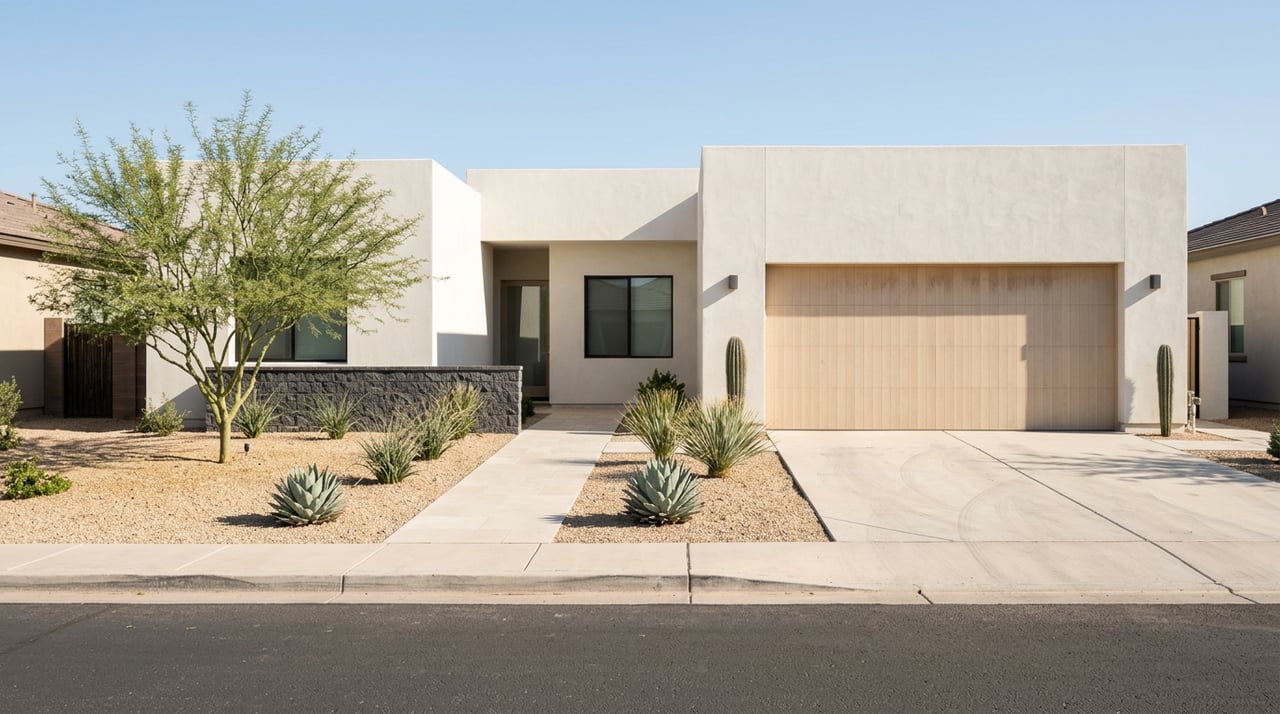
The East Valley feels suburban and convenient. You’ll find many master-planned communities, HOA amenities, community parks and neighborhood retail. Housing skews newer, with lots of homes built from the 1990s onward, plus ongoing new construction.
Citywide price snapshots in early 2026 showed typical values around the mid $400,000s to mid $500,000s in much of the East Valley, with Chandler, Gilbert and Mesa commonly trading below the higher-end North Scottsdale and Paradise Valley markets. Tempe often runs higher per square foot near ASU because of smaller lots and demand around its urban core.
For daily life, expect car-first commutes that often point west toward Tempe, Downtown Phoenix or Sky Harbor, or locally to Chandler and Mesa employers. You also get pockets of walkable dining like Downtown Chandler, Downtown Gilbert and Tempe’s Mill Avenue, which pack restaurants and nightlife into tight, easy-to-use areas.
North Valley day-to-day
The North Valley has more foothills, desert preserves and larger-lot neighborhoods, along with a strong resort and luxury feel in many pockets. North Scottsdale and Paradise Valley feature custom homes, gated communities and outdoor living designed around views. City housing reports also describe a higher share of upper-tier product and larger lots in Scottsdale’s northern areas (Scottsdale Housing Needs Assessment).
Expect quieter residential streets, golf and resort amenities nearby, and high-end dining centered in Old Town Scottsdale, Kierland and North Scottsdale corridors. If you live farther north, plan for longer drives to East Valley job centers and central Phoenix.
Commutes and transportation
Most relocators plan around car commutes. On the East side, the US-60, Loop 202 and Loop 101 form the backbone of daily travel. On the North side, the Loop 101, SR-51 and I-17 carry most trips in and out of Phoenix and Scottsdale. The Loop 101 is a primary ring route that touches both regions and shapes many commute decisions (Loop 101 overview).
Citywide averages from municipal and Census sources often land in the low to mid-20 minutes for suburban commutes, but experience varies by exact origin and destination. Chandler’s municipal reporting places typical commute times in the mid-20s, which aligns with similar East Valley suburbs (City of Chandler Community Needs Assessment). Always test your route with Google Maps at your actual commute hour to understand real travel time.
Light rail can simplify some trips if you live and work near stations. The Valley Metro system connects Downtown Phoenix, Tempe and central Mesa, and the South Central extension created a two-line configuration in 2025 that improved coverage in those corridors. It is less useful in lower-density areas like North Scottsdale and many far East Valley neighborhoods (light rail expansion details).
Jobs and daily destinations
East Valley: Chandler anchors a large semiconductor and advanced manufacturing cluster, with Intel and supplier firms drawing engineering and operations talent. That cluster has seen sustained investment in Greater Phoenix, making the East Valley a major magnet for manufacturing and tech roles (Greater Phoenix semiconductor overview). Tempe adds ASU-driven research, professional services and start-up activity. Mesa brings aerospace, logistics and health services around its airport and Gateway corridors.
North Valley: Scottsdale and Paradise Valley lean toward tourism, healthcare and professional services, with a significant concentration of offices in and around the Scottsdale Airpark and North Scottsdale. Many North Valley residents commute to roles across the metro while choosing neighborhoods for larger lots, preserve access and resort-area amenities.
The bottom line: align your home search to your job cluster. If your daily trips point to Chandler/Tempe/Mesa, the East Valley cuts friction. If you need proximity to North Scottsdale, central Phoenix or the resort corridor, the North Valley likely fits better.
Weekend life and recreation
East Valley highlights: Tempe’s Mill Avenue and Town Lake area offer active dining, nightlife and events near ASU, with an urban-suburban mix that appeals if you like to be out and about (Tempe activities). For the outdoors, the East Valley is your gateway to the Superstition Mountains, Usery Mountain area and the Salt River chain of lakes. You can be on a scenic hike or at the water in under an hour from many East Valley neighborhoods. A local trail hub is a good place to start if you plan weekend hikes and rides (Phoenix-area trail listings).
North Valley highlights: The McDowell Sonoran Preserve and Pinnacle Peak offer large, well-maintained trail networks and signature desert scenery right out your back door. Combine that with resort hotels, golf and high-end dining in Old Town and North Scottsdale, and you get a quieter residential feel with premium amenities close by (preserve and planning context).
Quick decision guide
Start your search in the East Valley if you want:
- Newer master-planned neighborhoods and HOA amenities.
- Shorter drives to semiconductor, manufacturing and ASU-linked jobs.
- Citywide typical home values that often start below North Scottsdale and Paradise Valley.
- Easy access to suburban downtowns like Chandler, Gilbert and Tempe.
Start your search in the North Valley if you want:
- Larger lots, custom homes and preserve access for hiking and views.
- Resort-area amenities, golf and high-end dining nearby.
- A quieter, luxury-leaning residential feel.
- Willingness to pay a premium for location, lot size and finishes.
Relocation checklist
Map your job first. If you or your household are tied to Chandler/Tempe/Mesa employers, start with East Valley suburbs. If your daily life centers on North Scottsdale, Paradise Valley or downtown Phoenix, focus north (regional industry context).
Pick your top three priorities. Common ones include commute time, lot size, access to recreation and proximity to dining or urban cores. Test routes at rush hour with Google Maps to see real drive times. Citywide averages are helpful, but your exact address and schedule matter (commute pattern context).
Use quick price context, then drill down. Citywide snapshots suggest the East Valley often runs in the mid $400,000s to mid $500,000s, while Scottsdale as a city tends to run higher and Paradise Valley higher still. Your real range will depend on neighborhood, lot size and condition, so plan to review current MLS data once you narrow to a few ZIP codes.
Verify school assignment by address. District boundaries do not always align to city lines. Use official district tools for places like Scottsdale Unified, Paradise Valley Unified, Chandler Unified, Gilbert Unified and Tempe districts to confirm the assigned schools for a specific property.
Visit in more than one season if you can. Winter and spring show off outdoor life. Summer reveals heat-management needs like shade, pools and parking. Many preserves limit mid-day hiking in hot months, so plan mornings.
Ready for a guided plan tailored to your move? With deep East Valley expertise, a friendly, high-touch process, and integrated support like an in-house lender and turnkey staging for sellers, we make your transition smoother from first call to keys. Reach out to Judy Collins to talk through your goals and next steps.
FAQs
Which area is more affordable in Phoenix?
- On average, the East Valley often offers lower typical home values than North Scottsdale and Paradise Valley. Exact prices vary by neighborhood, lot size and condition, so review current MLS data for specifics.
Is public transit realistic for daily commuting?
- Light rail works well if you live and work near stations connecting downtown Phoenix, Tempe and central Mesa. Most suburbs, especially North Scottsdale and many East Valley areas, remain car-centric.
Do North Valley homes usually have bigger lots?
- Many North Valley neighborhoods, especially in North Scottsdale and Paradise Valley, feature larger lots and custom homes. Always confirm lot size at the parcel level when you tour.
Where should I live if I work in semiconductors?
- If your job is tied to Chandler’s semiconductor and advanced manufacturing cluster, East Valley communities like Chandler, Gilbert and south Tempe can reduce drive-time friction compared to living farther north.