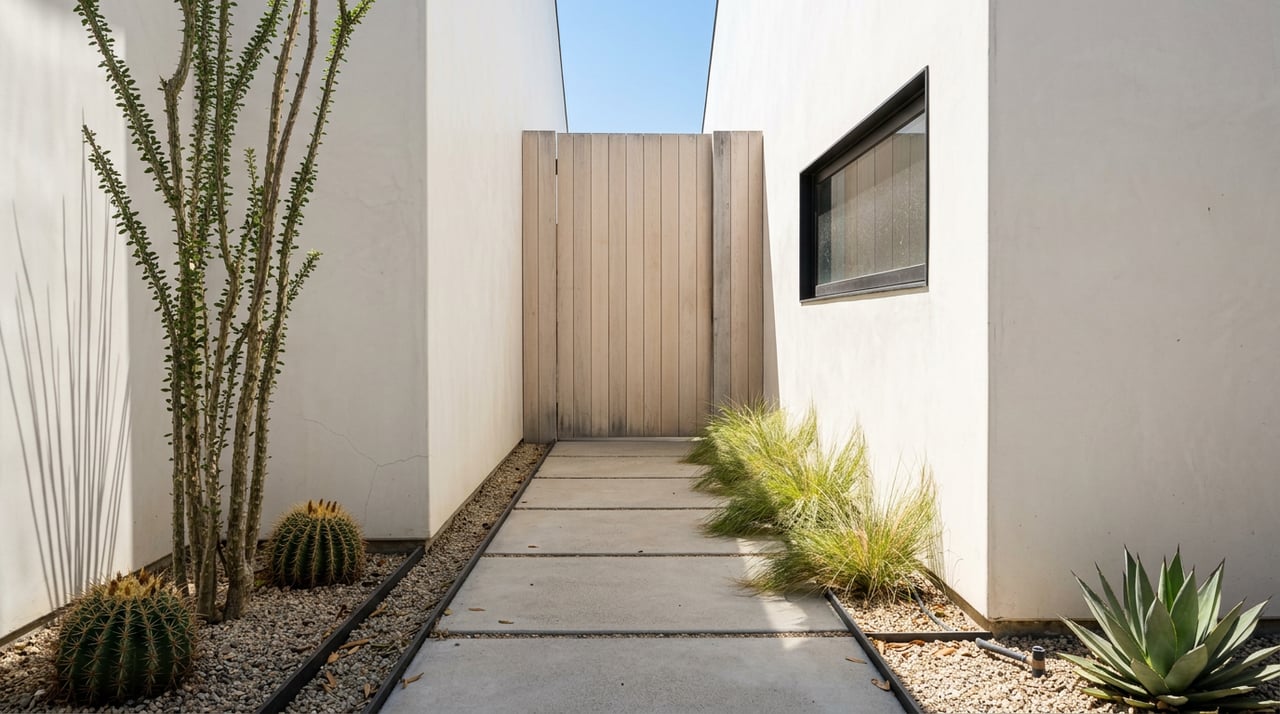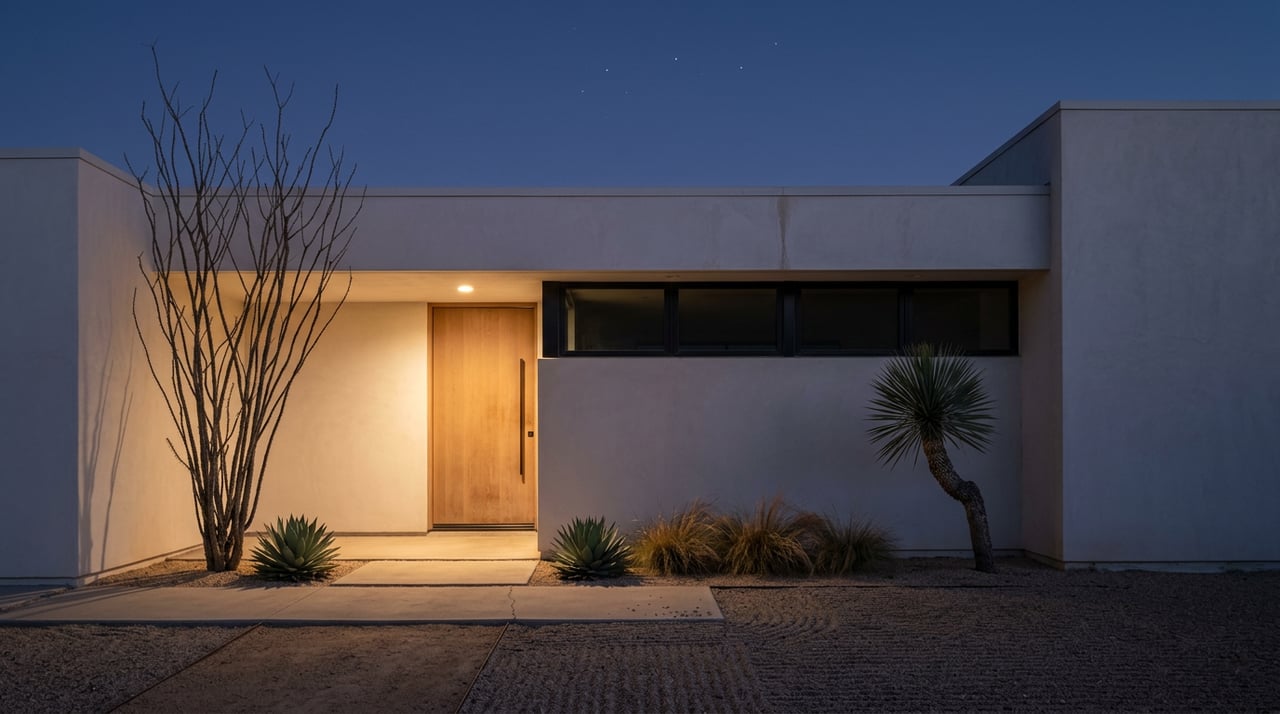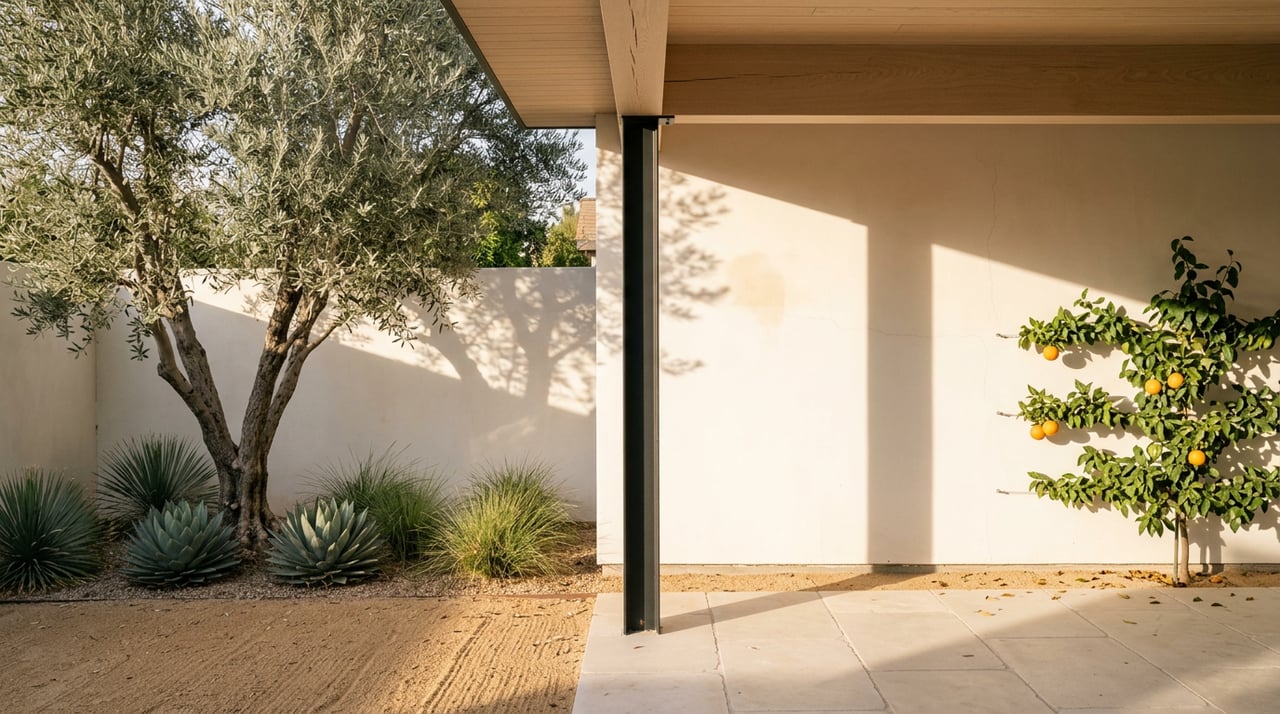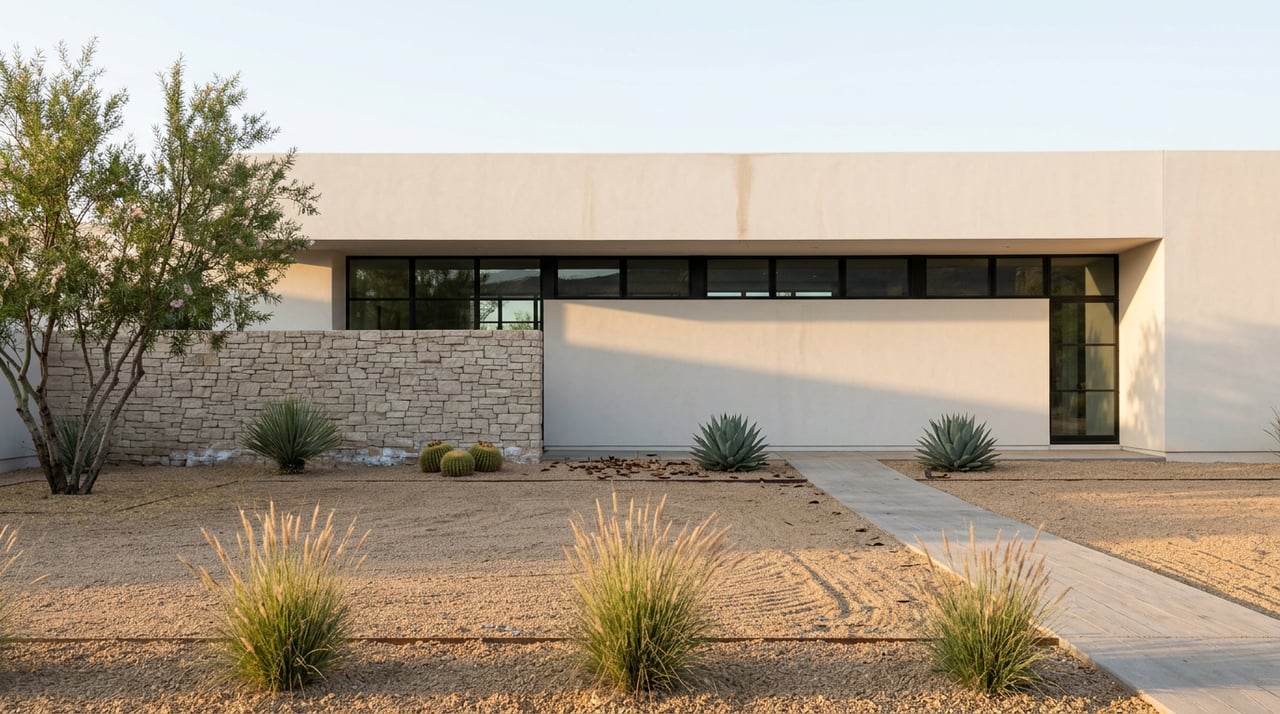
A buyer closes on a home in Paradise Valley on a Friday, picks out exterior paint colors over the weekend, and calls a painter for Monday morning. The painter asks one question before scheduling anything: is the lot on the town's hillside list. If it is, even a straightforward repaint can trigger a design review before a brush touches the wall, because Paradise Valley treats exterior color, roofing, and landscaping changes on hillside parcels as decisions that affect sightlines toward Camelback Mountain and Mummy Mountain, not simply as curb appeal. That surprise, more than the price tag, is usually the first sign a Scottsdale transplant gets that they have crossed into a different kind of market.
The two towns sit side by side on a map, share a school district for most residents, and get lumped together in national roundups of desert luxury living. But Paradise Valley and Scottsdale are behaving like two separate asset classes in 2026, and the gap between them traces back to a decision the two communities made six and a half decades apart, not to finish quality or golf memberships.
The zoning decision that still sets the price
In the late 1950s, residents in the unincorporated stretch between Phoenix and Scottsdale worried that annexation by either city would eventually bring apartment zoning, commercial strips, and higher property taxes to their doorstep. According to the town's own history, the Citizens Committee for Incorporation had one goal above the rest: keep zoning to one house per acre, keep the area entirely residential, and keep government regulation to a minimum. The petition succeeded, and the Town of Paradise Valley incorporated on May 24, 1961.
That single choice still governs supply today. The town's land area has not grown since, its zoning has not loosened, and the practical outcome is a town holding roughly 5,700 homesites that cannot meaningfully expand. Scottsdale incorporated as a full city, with commercial corridors and multifamily zoning available in parts of town, and it has kept building ever since. When two adjacent luxury markets have fundamentally different supply ceilings, a persistent price gap between them isn't a mystery. It's arithmetic that started with a permit fight in 1961.
What the current numbers show
The gap shows up clearly in the most current numbers available. As of August 2026, active Paradise Valley listings carry a median price of $4.95 million, or $964 per square foot, with a 127-day median time on market. That tracks with the town's closed sales from earlier this year: homes that sold in the three months ending in April 2026 went for a median of $4.6 million, or $885 per square foot, averaging 69 days to close.
Scottsdale, over the three months ending in May 2026, posted a citywide median sale price of $954,000, or $419 per square foot, with homes selling in an average of 63 days.
| Metric | Paradise Valley (Aug. 2026 listings) | Scottsdale (3 mo. ending May 2026, citywide) |
|---|---|---|
| Median price | $4.95M | $954K |
| Price per square foot | $964 | $419 |
| Median days on market | 127 | 63 |
The per-square-foot figure is the number worth sitting with. Paradise Valley buyers are paying more than double Scottsdale's rate for the same square footage, and they're waiting longer to close even at that price. Neither number is explained by upgraded kitchens.
Where the premium actually goes
Local agents covering Paradise Valley describe an entry point that has climbed to roughly $2 million to $5 million for the lower end of homes in town, some needing updates. The view premium is the clearest evidence of what buyers are actually paying for: homes once traded around $685 per square foot before the pandemic, and buyers now pay more than $2,000 per square foot for comparable homes with views of Camelback Mountain. Raw land alone, separate from any structure, runs roughly $3 million to $3.5 million or more per acre inside the town.
That's a market pricing scarcity, not square footage. Scottsdale's newer luxury communities, by contrast, can still add inventory because the city's zoning allows it. A gated golf-course community in the Pinnacle Peak corridor can price entry homes well under $2 million precisely because builders there aren't working against a permanent one-acre floor. Paradise Valley's ordinance means the supply of buildable dirt is fixed. Scottsdale's isn't.
Two luxury markets, two different clocks
The divergence goes beyond price. Scottsdale's citywide closed sales rose 13.5 percent year to date through July 2026, reaching 2,779 single-family homes, outperforming both Maricopa County as a whole, up 5.2 percent, and the broader Phoenix metro, up 5.1 percent, according to year-to-date figures reported by the Scottsdale Independent. Pending sales in Scottsdale climbed 8.2 percent over the same stretch.
Paradise Valley is moving to a slower rhythm. Even in a market local brokers describe as tilted toward sellers, typical listings still need well over 100 days to sell, and a large share of transactions close in cash. One Paradise Valley broker summed up the demand side of that equation to the Paradise Valley Independent in January 2026: "I feel like I should almost send a thank you card to the governor of California for the migration. And it keeps getting bigger and bigger." The North Scottsdale luxury corridor, covering the Pinnacle Peak and Desert Mountain area, tells a similar story at a different price point, with a median of $1.325 million on July 2026 closings and cash accounting for close to four in ten transactions there too.
Neither market is slowing down. They're just responding to demand with different levers. Scottsdale answers with more transactions. Paradise Valley answers with a higher price, because the transaction count physically cannot rise much further.
The amenities are catching up, not causing it
The clearest sign that this demand is durable rather than speculative is what's being built around it. Fender Musical Instruments is relocating its headquarters from Scottsdale into Paradise Valley. The Kimpton resort in town is in the middle of a $70 million renovation slated to finish between the final quarter of 2026 and early 2027, adding Arizona's first Katsuya restaurant alongside its existing Hecho Libre. A wave of new restaurants, including a bakery known for its cronuts and an eighth Valley location for a long-running local tavern, is filling in the redeveloped former Paradise Valley Mall site.
Scottsdale is absorbing its own restaurant wave at a much larger scale, which is only possible because the city has the commercial and residential land to keep growing around it. This year alone, Scottsdale's Old Town and Waterfront corridors have added or lined up BOA Steakhouse at Scottsdale Waterfront, the Taiwanese chain Din Tai Fung, and Drake's Hollywood, a fourth U.S. location for the chophouse concept that already operates in Dallas, Houston, and West Hollywood, taking over the former Buca di Beppo space on Scottsdale Road, according to Phoenix New Times. Local business coverage has framed this cluster of high-profile openings as a deliberate bet on sustained demand rather than an opportunistic gap fill, a signal that lines up with what the sales numbers already show.
In both towns, restaurants and headquarters are following the money into a market that already exists. They are not what's creating Paradise Valley's premium. The 1961 zoning line is.
What this means if you're choosing between them
If you want appreciation built on a supply ceiling that legally cannot move, and you're comfortable with a longer close and extra due diligence on hillside review and private deed restrictions the town itself does not enforce, Paradise Valley's numbers make sense as a long-term hold. If you want more inventory to choose from, a faster transaction, and a market currently outpacing the rest of the region on volume, Scottsdale's 2026 numbers reflect that trade in the other direction.
A few common questions
Is Paradise Valley part of Scottsdale? No. Paradise Valley is its own incorporated town, bordered by Scottsdale and Phoenix, though most of its resident children attend schools in the Scottsdale Unified School District.
Do I need town approval to repaint or reroof a home in Paradise Valley? If the property sits on one of the town's hillside-designated parcels, exterior changes including paint, roofing, and landscaping typically require review before work begins. Confirm a property's hillside status early in escrow rather than after closing.
Are most Paradise Valley home sales all-cash? Local agents report that a large share of luxury transactions in town close in cash, a pattern tied partly to out-of-state buyers. That's a different profile than a typical resale transaction across the broader Scottsdale market, where financed purchases remain common.
Whichever side of Lincoln Drive you're weighing, these numbers only tell you what a market is doing, not what your specific property is worth or how it should be positioned against what's currently for sale. The Collective AZ works across the East Valley and into Paradise Valley and Scottsdale with the same toolkit sellers expect at this price point, including professional photography, staging, and an in-house lender to keep financing from becoming its own source of delay. Get your instant home valuation and let's talk through what today's numbers mean for your address.